Today’s Passage: Ephesians 2:1-10
This series has examined the pressures that press against your faith from the outside and from within. Today we look at the foundation underneath it all. Paul writes to ordinary believers in Ephesus to establish a factual baseline. Before he gives them a single command, he anchors them in reality. The noise around you says many things about who you are, but the evidence points to a single truth. You are God’s workmanship.
Context Before, and then God
Paul builds this passage on a definitive turning point. He establishes the prior condition of every person: dead, following the drift of the world and the pull of the flesh. Then two small words alter reality forever: but God. Everything following those words describes a new, established fact. Paul describes the historical and spiritual turn that God executes in every believer.
Ephesians 2:1-3 (BSB)
¹ And you were dead in your trespasses and sins, ² in which you used to walk when you conformed to the ways of this world and of the ruler of the power of the air, the spirit who is now at work in the sons of disobedience. ³ All of us also lived among them at one time, fulfilling the cravings of our flesh and indulging its desires and thoughts. Like the rest, we were by nature children of wrath.
Paul states the baseline condition clearly. Dead means dead. It means an absolute absence of power to change your condition from the inside. He includes himself and every reader in this diagnosis. All of us once lived this way. This is the starting point for every human being.
Ephesians 2:4-5 (BSB)
⁴ But because of His great love for us, God, who is rich in mercy, ⁵ made us alive with Christ even when we were dead in our trespasses. It is by grace you have been saved!
Two words alter the entire verdict: but God. The verses before this show a dead person entirely unable to ask for life. God initiates the rescue. He acts entirely out of His own love and mercy, long before you take a single step toward Him.
Ephesians 2:6-7 (BSB)
⁶ And God raised us up with Christ and seated us with Him in the heavenly realms in Christ Jesus, ⁷ in order that in the coming ages He might display the surpassing riches of His grace, demonstrated by His kindness to us in Christ Jesus.
The resurrection happened to Jesus, and it happens to believers together with Him. Paul states that God raised you up and seated you in the heavenly places. You are not scrambling for a seat. In Christ you possess an established position right now. God intends to use you as living evidence of His kindness for ages to come.
Ephesians 2:8-9 (BSB)
⁸ For it is by grace you have been saved through faith, and this not from yourselves; it is the gift of God, ⁹ not by works, so that no one can boast.
Paul builds his case with absolute precision: by grace, through faith, a gift, without works. He closes every loophole. No one gets to claim credit for their salvation. No one earns this standing, and no one boasts, because Jesus Christ paid the entire bill.
Ephesians 2:10 (BSB)
¹⁰ For we are God’s workmanship, created in Christ Jesus to do good works, which God prepared in advance as our way of life.
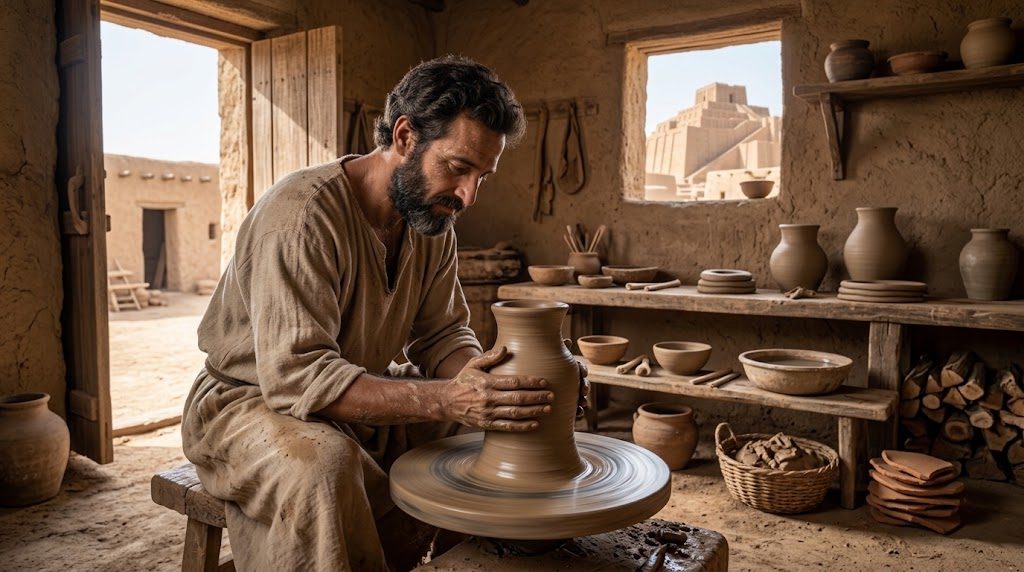
The entire argument lands on this single verse. You are a poiēma, pronounced poy-AY-mah. Strong's G4161, a thing made, a crafted and intentional work. This Greek term gives us the English word “poem.” A poem requires a poet. You are shaped deliberately, a specific work God formed with His own hands. , deliberately made new and designed for a purpose. God prepared specific good works for you to accomplish before this day ever dawned. This is the solid reality of the gospel applied to your life.
Study notes One line, written to a different church
Years later, Paul presents this same evidence to a different church.
"Therefore if anyone is in Christ, he is a new creation. The old has passed away. Behold, the new has come!" 2 Corinthians 5:17 (BSB)
A new creation means a completely new origin. God makes something entirely new with the same hands that spoke the universe into existence. He does not patch up the old self. The old self has passed away. The noise of your past no longer holds any authority over your identity.
You are God’s own workmanship, made alive in Christ, and equipped with good works for this exact day. Tomorrow morning, before you do anything else, speak this reality out loud. Say to yourself, “I am God’s workmanship, made new in Christ.” Let that truth establish the baseline for your day before the noise even opens its mouth.
Pray to Close
Go to God and acknowledge any areas where you have accepted false claims about your identity. Thank Him for stepping into your spiritual death and making the first move out of His immense love. Ask Him for the strength to walk today as a new creation, fully confident in the exact design He has for your life.
Worship for Today
You Say · Lauren Daigle
This song meditates on the established facts of your identity in Christ. Today focuses on what God has already made true. This song repeats those facts until they take root in your mind.
Listen: