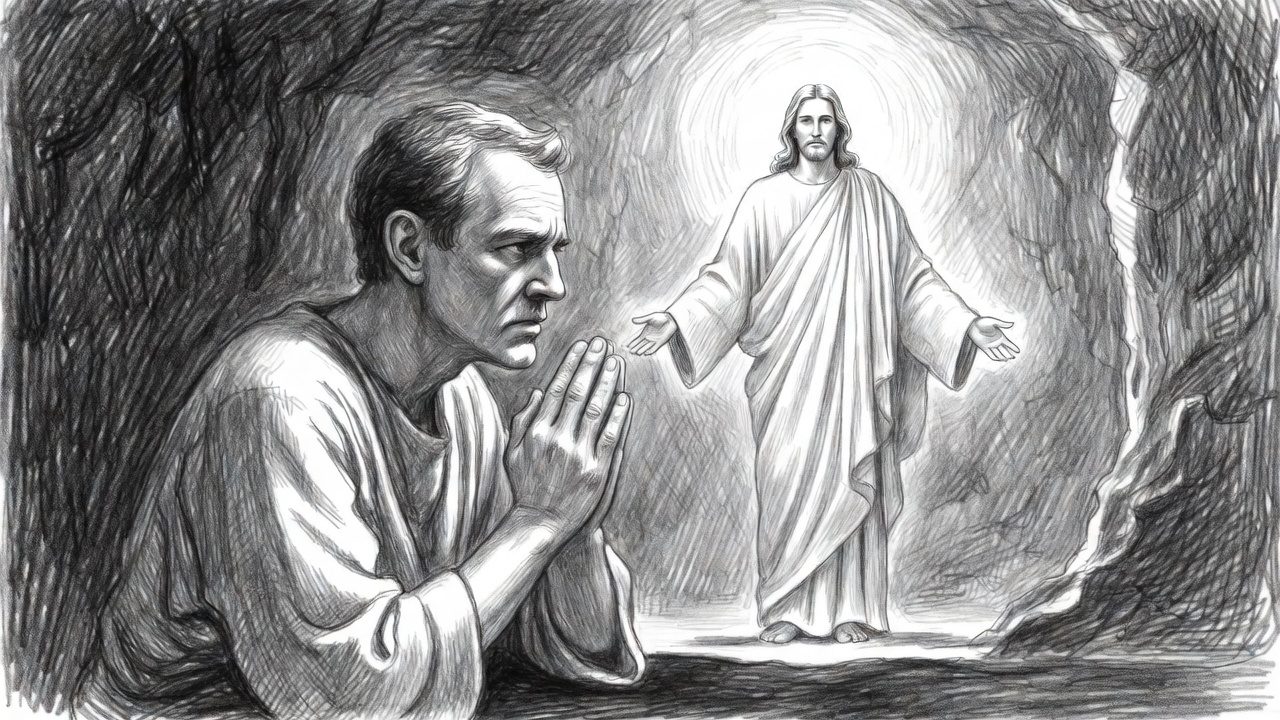
Pray to Begin
Ask: ask Jesus to meet you here today, the way He met a friend who doubted.
Confess: any question about Jesus you have been afraid to say out loud.
Give thanks: Jesus does not turn away from honest doubt. He walks toward it.
Today’s Passage: John 20:24–29
Jesus is alive again. Ten of His friends have already seen Him with their own eyes. One friend was not in the room that day. His name is Thomas. He says he needs to see for himself before he will believe.
As you read, hold this: Thomas touched the wounds of Jesus and knew he was touching God.
Context One God, and Thomas knew it
Every faithful Jew prayed the same words each day: “Hear, O Israel: the LORD our God, the LORD is one” (Deuteronomy 6:4). Calling a man “God” was not a small thing to say. It could sound like breaking the very first command God ever gave. That is the weight sitting inside the words Thomas is about to speak.
John 20:24–25 (BSB)
²⁴ Now Thomas called Didymus, one of the Twelve, was not with the disciples when Jesus came. ²⁵ So the other disciples told him, “We have seen the Lord!” But he replied, “Unless I see the nail marks in His hands, and put my finger where the nails have been, and put my hand into His side, I will never believe.”
Didymus means “twin” in Greek. Thomas missed the biggest moment of his life by one visit. His friends bring him the best news anyone has ever heard: Jesus is alive. Thomas does not believe them.
Is that wrong? Not exactly. Thomas is not pretending. He says exactly what he feels. Honest doubt has a place in faith too, as long as it stays in the room and keeps asking.
John 20:26–27 (BSB)
²⁶ Eight days later, His disciples were once again inside with the doors locked, and Thomas was with them. Jesus came and stood among them and said, “Peace be with you.” ²⁷ Then Jesus said to Thomas, “Put your finger here and look at My hands. Reach out your hand and put it into My side. Stop doubting and believe.”
A whole week passes. Thomas keeps showing up with the others, even while he doubts. That matters. He stays near the door Jesus might walk through again.
Then Jesus comes, straight through locked doors, straight to Thomas. He does not scold him first. He offers exactly what Thomas asked for: hands, side, touch. Jesus knew Thomas’s demand before anyone told Him. And still He comes close enough to touch.
“Stop doubting and believe.” It is a command, but a gentle one. Not a door slammed shut. A door held open.
John 20:28 (BSB)
²⁸ Thomas replied, “My Lord and my God!”
Word study "God": theos (John 20:28)
Greek: θεός (theos), pronounced THEH-oss. Strong’s G2316.
This is the ordinary Greek word for God: the same word used for God the Father everywhere else in the Bible. Thomas does not call Jesus “a great teacher.” He does not use “Lord” the polite way, like calling someone “sir.” He uses the word for God Himself, and he says it straight to Jesus’s face.
Notice what Jesus does not do. He does not say, “That is too far.” He does not lower the title or correct Thomas. Jesus accepts the words. If Thomas were wrong, this would be the moment for Jesus to stop him. He does not stop him. He receives the worship.
John 20:29 (BSB)
²⁹ Jesus said to him, “Because you have seen Me, you have believed; blessed are those who have not seen and yet have believed.”
Jesus does not scold Thomas for needing to see. But He looks past that room, past that one evening, and He blesses a much bigger group: everyone who will believe without ever touching a nail mark. That includes every reader at this table today.
Study notes The Gospel's first word and its last confession
John’s Gospel opens with a bold claim about Jesus, made in the author’s own voice. Twenty chapters later, a doubting friend says almost the same thing out loud, straight to Jesus. The whole book walks from that claim to this confession.
"In the beginning was the Word, and the Word was with God, and the Word was God." John 1:1 (BSB)
Personal Application
- What honest question about Jesus have you been afraid to say out loud?
- Jesus met Thomas’s doubt with His own wounds, not a lecture. Where do you need Jesus to meet you like that?
Pray to Close
The central truth: Jesus is not only a good teacher or a man raised from the dead. He is Lord and God, and He welcomes honest questions on the way to worship.
Confess: the doubts you have kept quiet instead of bringing to Him.
Ask: for eyes to see Jesus for who He really is.
Give thanks: that Jesus walked through a locked door for the one friend who doubted, and He would do the same for you.
Decision of the day
Today’s decision: I will say one honest question or doubt to God in prayer today, instead of keeping it silent.
Worship for Today
Living Hope · Phil Wickham
This song is about the empty tomb and what it changes. Hope stops being a wish and becomes alive, because Jesus is alive. Thomas touched the risen Jesus and could not stay quiet about what he found. Sing this as your own answer to what an empty tomb and open wounds mean for you.
Listen: